Tag Archives: desert garden

Arizona Poppy (Kallstroemia grandiflora)

Right now, the Arizona poppy in my favorite flower. It is painting the landscape in the Tuscon area in seas of orange.
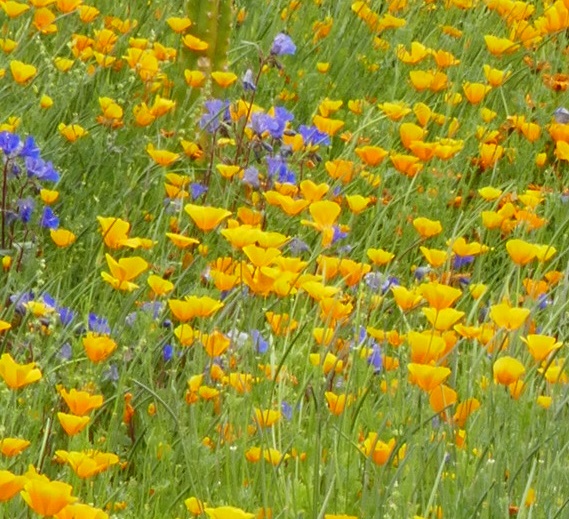
The Arizona poppy (Kallstroemia grandiflora), is a striking wildflower native to the southwestern United States and northern Mexico. Also referred to as the Desert Calico or Mexican Poppy, this resilient plant is renowned for its vibrant orange-yellow blossoms that paint the arid landscapes with bursts of color, particularly during the springtime.

Thriving in dry, rocky soils and arid climates, the Arizona poppy is well-adapted to survive in harsh desert conditions, making it a symbol of resilience and endurance. It is a perfect addition to any landscape. Its flowers, typically about an inch in diameter, bloom atop thin stems, swaying gently in the breeze.

Not only is the Arizona poppy visually captivating, but it also plays a crucial role in its ecosystem, providing nectar and pollen for various pollinators like bees and butterflies. Additionally, its seeds serve as a food source for desert-dwelling birds and small mammals.

Next time you find yourself in the desert landscapes of the Southwest, keep an eye out for this resilient wildflower, adding a splash of color to the arid terrain.


This post brought to you by the letter ‘K’ for Kallstroemia grandiflora.

#AtoZChallenge 2024 letter K

1 Comment

Filed under Gardening, Plants

Jojoba

Meet the jojoba shrub (Simmondsia chinensis), a fascinating plant renowned for its versatile uses and resilience in arid climates. Native to the deserts of the American Southwest, this evergreen shrub has captured the attention of skincare enthusiasts, environmentalists, and sustainable industries alike. We in the Sonoran desert love it for its resilience in our landscape.

Natural Beauty Secret: Jojoba oil, extracted from the seeds of the jojoba (pronounced ho-ho-ba), is a prized ingredient in skincare products. Rich in vitamins E and B, as well as antioxidants, jojoba oil nourishes and hydrates the skin. It’s a staple in moisturizers, lip balms, and hair care products, offering a natural solution for healthy skin and hair. Who doesn’t need this in our dry climate?

Eco-Friendly Crop: Beyond beauty, jojoba cultivation presents environmental benefits. Thriving in harsh desert conditions, jojoba requires minimal water and pesticides, making it a sustainable alternative to traditional crops. Its deep roots help prevent soil erosion, and it can even be used in land reclamation projects.

A Perfect Shrub for Desert Homes: Here in the Sonoran Desert the jojoba is right at home. It is a native not only to the Sonoran desert, but it calls much of the Southwest home. These tough plants thrive in our well-drained soils with sand or you can amend it with decomposed granite. Jojoba prefers full sun dry climates and can tolerate saline and nutrient-poor soils.

Diverse Applications: The versatility of jojoba extends beyond cosmetics. Its oil is a common ingredient in industrial lubricants, biofuels, and even inks and paints. Additionally, jojoba meal, a byproduct of oil extraction, serves as a nutritious animal feed.

Symbol of Resilience: In a world increasingly concerned with sustainability and climate change, the jojoba shrub symbolizes resilience and adaptability. Its ability to thrive in harsh conditions while offering a multitude of benefits underscores the importance of harnessing nature’s gifts responsibly.

Whether you’re seeking a natural skincare solution, exploring sustainable agriculture, or simply marveling at the wonders of the plant kingdom, the jojoba shrub offers a captivating journey into the intersection of nature and human ingenuity. Let’s celebrate this remarkable plant and its contributions to our world!

Further reading:
National Library of Medicine
University of Arizona, Campus Arboretum


This post presented by the letter ‘J’

#AtoZChallenge 2024 letter J

4 Comments

Filed under Gardening, Plants