Tag Archives: Gardening

Arizona Poppy (Kallstroemia grandiflora)

Right now, the Arizona poppy in my favorite flower. It is painting the landscape in the Tuscon area in seas of orange.
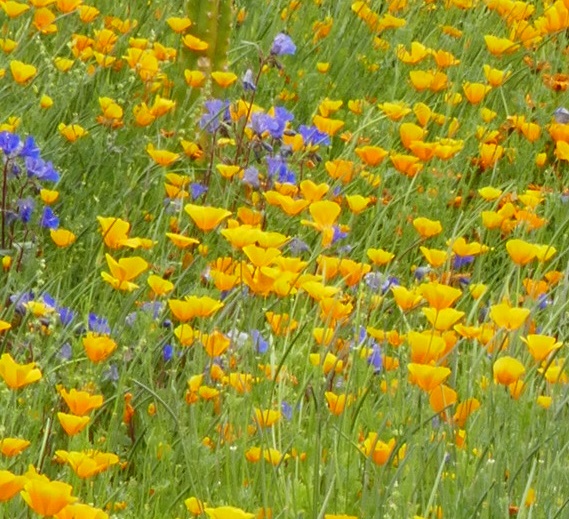
The Arizona poppy (Kallstroemia grandiflora), is a striking wildflower native to the southwestern United States and northern Mexico. Also referred to as the Desert Calico or Mexican Poppy, this resilient plant is renowned for its vibrant orange-yellow blossoms that paint the arid landscapes with bursts of color, particularly during the springtime.

Thriving in dry, rocky soils and arid climates, the Arizona poppy is well-adapted to survive in harsh desert conditions, making it a symbol of resilience and endurance. It is a perfect addition to any landscape. Its flowers, typically about an inch in diameter, bloom atop thin stems, swaying gently in the breeze.

Not only is the Arizona poppy visually captivating, but it also plays a crucial role in its ecosystem, providing nectar and pollen for various pollinators like bees and butterflies. Additionally, its seeds serve as a food source for desert-dwelling birds and small mammals.

Next time you find yourself in the desert landscapes of the Southwest, keep an eye out for this resilient wildflower, adding a splash of color to the arid terrain.


This post brought to you by the letter ‘K’ for Kallstroemia grandiflora.

#AtoZChallenge 2024 letter K

1 Comment

Filed under Gardening, Plants

Jojoba

Meet the jojoba shrub (Simmondsia chinensis), a fascinating plant renowned for its versatile uses and resilience in arid climates. Native to the deserts of the American Southwest, this evergreen shrub has captured the attention of skincare enthusiasts, environmentalists, and sustainable industries alike. We in the Sonoran desert love it for its resilience in our landscape.

Natural Beauty Secret: Jojoba oil, extracted from the seeds of the jojoba (pronounced ho-ho-ba), is a prized ingredient in skincare products. Rich in vitamins E and B, as well as antioxidants, jojoba oil nourishes and hydrates the skin. It’s a staple in moisturizers, lip balms, and hair care products, offering a natural solution for healthy skin and hair. Who doesn’t need this in our dry climate?

Eco-Friendly Crop: Beyond beauty, jojoba cultivation presents environmental benefits. Thriving in harsh desert conditions, jojoba requires minimal water and pesticides, making it a sustainable alternative to traditional crops. Its deep roots help prevent soil erosion, and it can even be used in land reclamation projects.

A Perfect Shrub for Desert Homes: Here in the Sonoran Desert the jojoba is right at home. It is a native not only to the Sonoran desert, but it calls much of the Southwest home. These tough plants thrive in our well-drained soils with sand or you can amend it with decomposed granite. Jojoba prefers full sun dry climates and can tolerate saline and nutrient-poor soils.

Diverse Applications: The versatility of jojoba extends beyond cosmetics. Its oil is a common ingredient in industrial lubricants, biofuels, and even inks and paints. Additionally, jojoba meal, a byproduct of oil extraction, serves as a nutritious animal feed.

Symbol of Resilience: In a world increasingly concerned with sustainability and climate change, the jojoba shrub symbolizes resilience and adaptability. Its ability to thrive in harsh conditions while offering a multitude of benefits underscores the importance of harnessing nature’s gifts responsibly.

Whether you’re seeking a natural skincare solution, exploring sustainable agriculture, or simply marveling at the wonders of the plant kingdom, the jojoba shrub offers a captivating journey into the intersection of nature and human ingenuity. Let’s celebrate this remarkable plant and its contributions to our world!

Further reading:
National Library of Medicine
University of Arizona, Campus Arboretum


This post presented by the letter ‘J’

#AtoZChallenge 2024 letter J

4 Comments

Filed under Gardening, Plants

Hornworms and Sphinx Moths

Have you ever encountered a hornworm in your garden and marveled at its size and bright green appearance? These intriguing creatures belong to the family Sphingidae and are renowned for their voracious appetite and unique features. After the chrysalis stage, the hornworm emerges as the sphinx moth. In southeastern Arizona, 49 species of sphinx moths have been collected.

Hornworms are large, robust caterpillars with distinctive horn-like protrusions at their posterior end, hence their name. These “horns” are harmless and are not used for defense but rather serve as a distinguishing characteristic of the species. The green caterpillar is 3-5 inches long with white and black stripes down either side of its body.

One well-known species of hornworm is the tomato hornworm which, as its name suggests, feeds primarily on tomato plants. It also has a taste for eggplants The tomato hornworm, Protoparce quinquemaculata, is the green caterpillar of a Sphinx moth. They are voracious eaters and can strip a tomato plant of its foliage overnight.

Despite their potentially destructive feeding habits, hornworms play a vital role in the ecosystem. As caterpillars, they serve as a food source for various predators, including birds, wasps, and certain insect-eating mammals. Additionally, they undergo metamorphosis into large, beautiful sphinx moths, which are important pollinators for many flowering plants.

The best protection against these caterpillars, check your plants regularly. If you find one, just pluck it off and toss it into a distant patch of undergrowth. They love to wriggle under your fingers clinging to the tomato stalk, but don’t fear, they will let go. If you find one, you will most likely find many so be vigilante when hunting them down. If you have praying mantis or assassin bugs they will make a meal of the hornworm.

Next time you spot a hornworm in your garden, take a moment to appreciate this remarkable creature. While they may pose a challenge to gardeners, they are also a testament to the diversity and complexity of the natural world.

Further reading:
Tomato Hornworm from the Cochise Master Gardeners
University of Arizona, Backyard Gardener – Sphinx Moth

Photo of Tomato Hornworm ©Stephanie van Latum and used with permission


This post is brought to you by the letter ‘H’

#AtoZChallenge 2024 letter H

2 Comments

Filed under Gardening, Pests

Nature’s Graceful Guardian

Discovering the Marvels of the Green Lacewing

In the intricate tapestry of the natural world, there exists a creature so delicate yet mighty, so unassuming yet crucial to the balance of ecosystems – the Green Lacewing. Often overlooked amidst the buzz of charismatic species, this dainty insect holds a pivotal role in maintaining ecological harmony. Let us embark on a journey to unravel the enigmatic beauty and remarkable contributions of the Green Lacewing.

The Elegance of Nature’s Design

At first glance, the Green Lacewing (Chrysopidae) appears as a delicate leaf suspended mid-air, its translucent wings adorned with intricate patterns resembling delicate lace – hence its name. Sporting vibrant shades of green, these ethereal insects embody a mesmerizing elegance, often blending seamlessly into their verdant surroundings.

A Benevolent Predator

Beyond its aesthetic allure, the Green Lacewing serves as a beacon of natural pest control. In its larval stage, this unassuming predator emerges as a voracious hunter, preying upon a myriad of garden pests such as aphids, thrips, mites, and caterpillars. Armed with formidable mandibles, the lacewing larvae exhibit a remarkable appetite, devouring pests with unparalleled efficiency.

Cultivating Harmony in the Garden

For avid gardeners and cultivators, inviting Green Lacewings into the garden is akin to welcoming a brigade of natural allies. Simple practices such as planting native flowering plants, minimizing pesticide use, and providing suitable habitats can help attract and sustain populations of these beneficial insects. By nurturing a diverse ecosystem within our gardens, we not only safeguard against pest outbreaks but also promote resilience and vitality in our green spaces.

A Testament to Nature’s Ingenuity

In the delicate dance of predator and prey, the Green Lacewing stands as a testament to nature’s ingenuity – a symbol of resilience, adaptability, and grace. As we marvel at the intricate beauty of these ethereal insects, let us also reflect on the profound lessons they impart. In their delicate wings, we find a reminder of our interconnectedness with the web of life, and in their silent vigil, we discover the enduring power of harmony in the natural world.

In the grand symphony of biodiversity, the Green Lacewing takes its rightful place – a guardian of gardens, a harbinger of balance, and a beacon of hope for a sustainable future.

1 Comment

Filed under Gardening

Fairy Dusters and Fig Trees

One of the great things about living in the Sonoran Desert are the variety of plants that grow here. For the letter ‘F’ in the A to Z Blogging Challenge, I give you the Fairy Duster (Calliandra californica) and Fig Tree (Ficus carica).

Fairy Duster

The Fairy Duster has to be about the cutest sounding plant around, but it is not the prettiest (IMHO). Although the spikey flowers are reminiscent of a duster you could associate with a fairy, the plant itself is very woody. When we first moved into our new home, I had three of these in the front yard. I now have zero. I was sad that none of them survived the winters up here (we are a bit higher than Tucson so the winters are just cold enough that we have snow and frost). Yet, they thrive just below us in and around Tucson.

Historically, the fairy duster’s roots have been used for a red dye used in leather work. Decoctions were used in folk medicine to treat cystitis, kidney ache, urethritis, prostate inflammation, cramps, fever, and toothache.

Further reading on the fairy duster can be found on these websites:
U of A’s Campus Arboretum and Natives Now SoCal.

Fig Tree

The humble fig has over 800 species and are mostly found in the tropics. There is one that I’m happy to say, grows in my yard, the Black Mission Fig (Ficus carica ‘Mission’). I am most excited about this tree because I planted it as a 6″ cutting (it is now about 8″ tall and has 10 leaves) from a larger fig tree. Most likely the “parent” fig is in the Master Gardeners’ demonstration gardens here in Tucson.

Fig trees are very hardy and can grow in Tucson’s tough soil with little to no added fertilizers. They have two harvest seasons so fruit is available nearly all year long. Because the fig is deciduous, avoid planting this near a pool or a patio. Also keep in mind that they grow to 20-30 feet high AND wide so give them enough space to spread out. Their roots also spread far and wide taking water from any resource available including other plants. A good spot to plant this fun fruit tree is near a basin that will provide plenty of water during monsoons.

Have you ever noticed the absence of figs in the produce section of the local grocer? Most fruits and vegetables that find their way to the grocery store are usually pick, packed, and shipped weeks before arriving at the produce section. Figs have a very short shelf life of only a week or two so unless you live by a fig grove, the possibility of finding fresh figs is pretty low. If you do happen to find fresh figs you’re in for a treat. The range of flavors across the many varieties run from sweet to nutty.

What I’m most looking forward to is the shade a fig can provide. I can see it now, sitting under the canopy of large lobed leaves with tea and a good book. I can’t think of a better way to spend an afternoon.

Learn more about fig trees:
Growing Common Figs in the Low Desert
Growing Edible Figs


5 Comments

Filed under Gardening, Plants

Container Gardening in the Desert

Container gardening in the desert presents unique challenges and opportunities due to the arid climate and extreme temperatures. With proper planning and care, however, it can yield stunning results, allowing you to enjoy lush greenery and vibrant blooms even in the harshest conditions. Selecting the right containers is crucial; opt for terracotta, and steer away from plastic. Plastic containers are quite a bit lighter than terracotta, but they tend to dry out and crack under the intense heat and UV rays from the sun. Terracotta is made for the heat and by spending the added $$ for it, you will have many years of enjoyment from it. Be sure there is adequate drainage to prevent waterlogged roots.

When it comes to plant selection, prioritize species that are native to desert environments or are well-adapted to thrive in such conditions. Succulents, cacti, and drought-tolerant herbs like rosemary and lavender are excellent choices for desert container gardens. Incorporating a mix of textures and colors can create visually appealing arrangements while conserving water and minimizing maintenance requirements. Additionally, using mulch or decorative stones on the soil surface can help retain moisture and regulate soil temperature, promoting healthier growth.

Successful container gardening in the desert relies heavily on strategic placement and diligent care. Position containers in areas that receive adequate sunlight while providing some protection from the scorching midday heat. Regular watering is essential, especially during the hot summer months, but be mindful not to overwater, as excess moisture can lead to root rot in desert-adapted plants. With thoughtful planning and attention to the unique needs of desert flora, container gardening can create stunning oasis-like displays that thrive despite the challenges of the desert climate.


This post is presented by the letter ‘C’.

#AtoZChallenge 2024 letter C

2 Comments

Filed under Gardening, Plants

What’s in a Botanic Name?

Have you ever wondered what the long, Latin(ish), unpronounceable names are that you see on every label of a plant? Are they important? What do they mean? Here’s the short story on a somewhat long explanation.

Let’s first take a look at the two names that are associated with every plant out there (yes, every single plant on the planet has a unique botanical name). Botanical names are usually made up of two words. The first word (always capitalized) is the bigger group (genus) that a plant belongs to. Take the cactus which all belong to the family group, Cactaceae. The second word (never capitalized) relates to the specific plant. So, Carnegiea gigantea refers to the cactus known as the saguaro. Notice the botanic name is italicized and by the “rules” it should also be underlined, but this is not always practiced.

Saguaro in Catalina State Park
Carnegiea gigantea

So, if Carnegiea is the name for cactus, what other families are out there? (In honor of this being the letter B in the A to Z blogging challenge, these are a few that start with the letter B):

  • Baileya multiradiata, Desert Marigold
  • Berlandiera lyrata, Chocolate Flower (a must have in every desert garden – it smells like chocolate!)
  • Brandegea bigelovii, Desert Starvine

But what do these designations signify? While a comprehensive exploration exceeds the scope of this discourse, let’s unravel a couple of examples. Consider Berlandiera lyrata, where “lyrata” hints at its leaf shape reminiscent of a lyre, while “multiradiata” aptly describes its profusion of rays, a characteristic trait of marigolds. Furthermore, “gigantea” in Carnegiea gigantea evokes the colossal stature of the saguaro, befitting its towering presence in the desert landscape.

Is the botanical name important? YES! Can you just go to the store and ask for a Texas Ranger? NO! I answer these questions in all caps because I experienced this first hand. When I moved to our home here in Tucson, I was busy at the local garden centers filling my half acre yard with desert dwelling plants. In one area I put in three Texas Rangers. These were to grow to 6′ to 8′ in height and width. The size is perfect for the spot I put them in. One problem cropped up though. I planted the three with a giant hole between plant #1 and #2 so I needed one more Texas Ranger to fill the gap. I went back to the nursery not realizing that not every Texas Ranger is the same. I grabbed one that turned out to be a different species that only grows to 4′ and is a different color. There are about 10 different species of Texas Ranger so my next trip to the garden center I went armed with the botanical name; Leucophyllum pruinosum, not Leucophyllum maygophullum.

Next time you are looking at a new plant, get to know the botanical name. You may never remember it, but it is what sets each plant apart from another.

If you have had any plant foibles I’d love to hear about them. Leave your story in the comments.
Until then,
Happy Gardening!!


This post was brought to you by the letter B and written specially for the 2024 A to Z blogging challenge.

#AtoZChallenge 2024 badge B

2 Comments

Filed under Arbitrary Thoughts, Gardening, Plants

Apples and Aloe

Welcome the first post post for the A to Z Blogging Challenge! I am excited to be writing about desert gardening throughout the month of April. You will find that I will be mixing things up a bit with not just posts about gardening, but you will find artwork and photography as well. I am a professional dabbler in a variety of art forms so get ready for fun this month.

Apples

Anna Apple
Malus domestica ‘Anna’

Today is dedicated to the letter ‘A’ and I bring you apples and aloe. Let’s start with apples. You might wonder, “Can apples truly thrive in the desert heat?” Indeed, for many apple varieties, the scorching temperatures of the desert pose a challenge. However, there exist a select few varieties that flourish remarkably well in the Sonoran Desert. The key to their success lies in choosing cultivars with lower chill hour requirements. Chill hours denote the cold hours (typically between 32 and 45 degrees Fahrenheit) necessary for a tree to yield fruit. Seek out apple varieties demanding 300 chill hours or fewer, such as the resilient Anna, the esteemed Beverly Hills, or the adaptable Ein Shemer. For an in-depth exploration of the diverse array of deciduous fruit and nut trees compatible with the Doran Desert’s conditions, I recommend perusing the comprehensive publication crafted by The University of Arizona’s Cooperative Extension. https://extension.arizona.edu/sites/extension.arizona.edu/files/pubs/az1269.pdf

Aloe

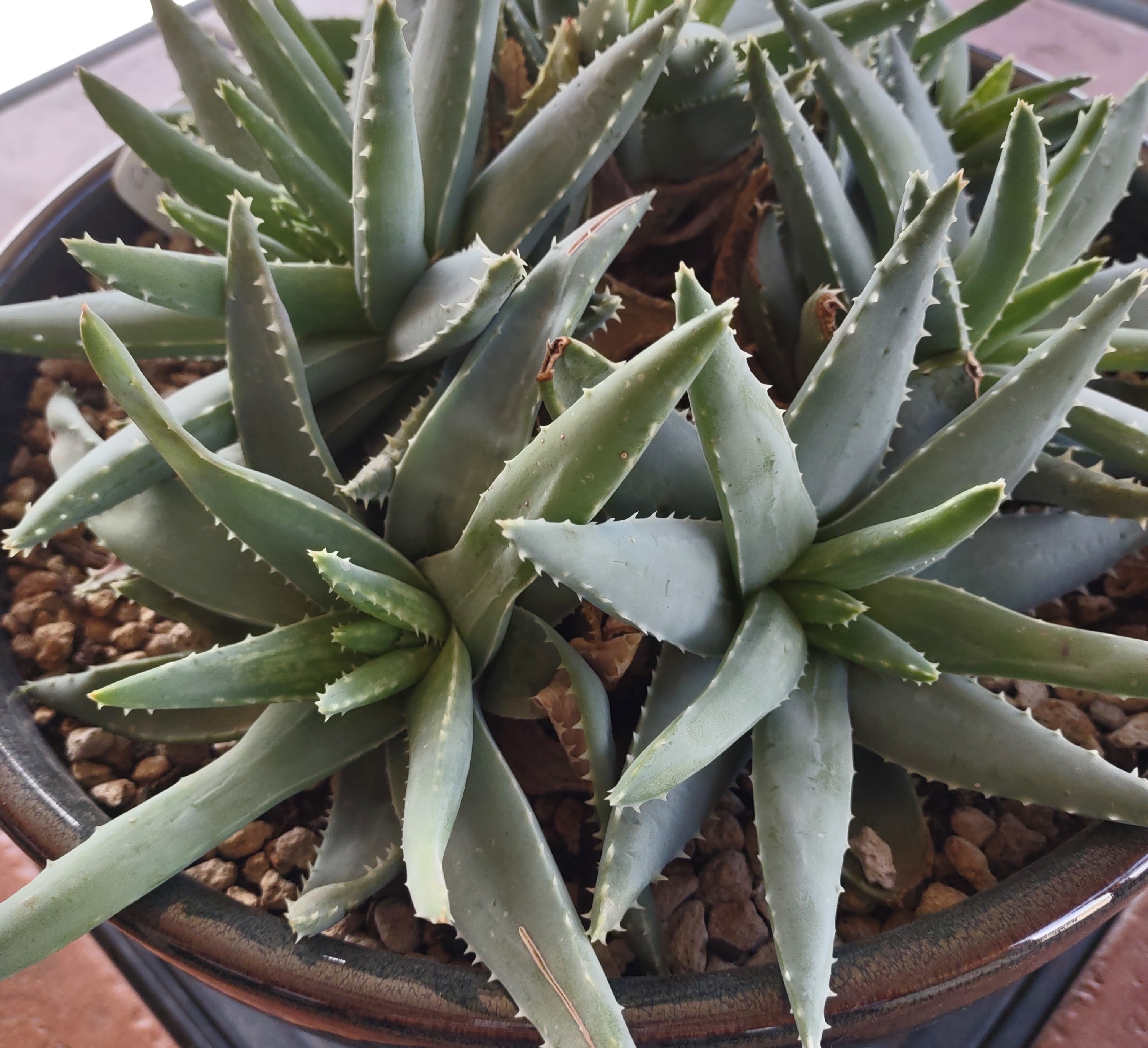
Crocodile Aloe
Aloe brevifolia

Let’s now shift our focus to a plant that seems perfectly at home in the desert climate: the Aloe. As a newcomer to this region within the past few years, it’s been a curious sight to encounter Aloe plants thriving in front patches of desert landscapes. Unlike my previous experiences where Aloe was a cherished household plant, here they seem to flourish almost effortlessly, spreading prolifically and, if left unchecked, even overtaking entire gardens. To adapt to this unique environment (and to preserve my garden) I’ve relocated my Aloe to a pot on my front porch, a stark contrast to its former place in the living room. Given the occasional dips in temperature, particularly in my location north of Tucson and at a slightly higher elevation, I’ve taken to covering it with frost cloth when the mercury drops below 35 degrees Fahrenheit.

There are over 600 species of aloe and the most recognizable is the Aloe vera known for it’s medicinal and cosmetic properties. Most flower in the spring with clusters of tubular flowers that bunch at the end of a long stalk. It is said that the sticky gelatinous interior of the leaves can be used to sooth minor skin irritations or, if consumed, can help with digestive issues*.

There are many other desert dwellers that start with the letter ‘A’ such as acacia, Arizona milkweed, and Arizona rosewood. Tomorrow I’ll introduce you to bottlebrush and botanical names. Why is it so important to arrive at the garden store with more than just a common name.

Until then, enjoy your garden, wherever it is.

*(Obligatory disclaimer: I am NOT a healthcare professional. Before using aloe for any health problems consult a medical professional).


This post brought to you by the letter ‘A’.

#AtoZChallenge 2024 badge A

6 Comments

Filed under Gardening

Master Gardener Update

Am I a master gardener yet? I’m working on it! I completed the classroom portion of the program and am now an intern volunteering at the demonstration gardens in Tucson. The specific garden I’m working in is called Small Spaces which has smaller sub-gardens showing what can be done in a small space.

What I find interesting is that even if you have a large space the small spaces garden demonstrates ways to plan your own landscape no matter how big or small. Let’s say you want to have a Mediterranean feel to your landscape. If you pop over to the Pima County Demonstration Gardens, then check out the Small Spaces plot for a Mediterranean Garden. You can duplicate what has already been planted, then ask the Master Gardener for suggestions on additional plants you could add. Also, do some research on your own, and before you know it you’ll have the garden of your dreams.

African Daisy
Chrysactinia mexicana

Right now the Tucson area is blooming! There are lupine, penstemons, globe mallow, African daisies, and a vast number of other flowers that grow wild here. The palo verde and mesquite trees will be next. I’ll do my best to get photos of things as they come out. I should have plenty of opportunities during the A to Z blogging challenge as I plan to take a look at desert gardening through the month of April. Until then, enjoy these photos.

Perry’s Penstemon
Penstemon parryi
Desert Poppy with Mexican Fencepost
Eschscholzia glyptosperma
Pachycereus marginatus
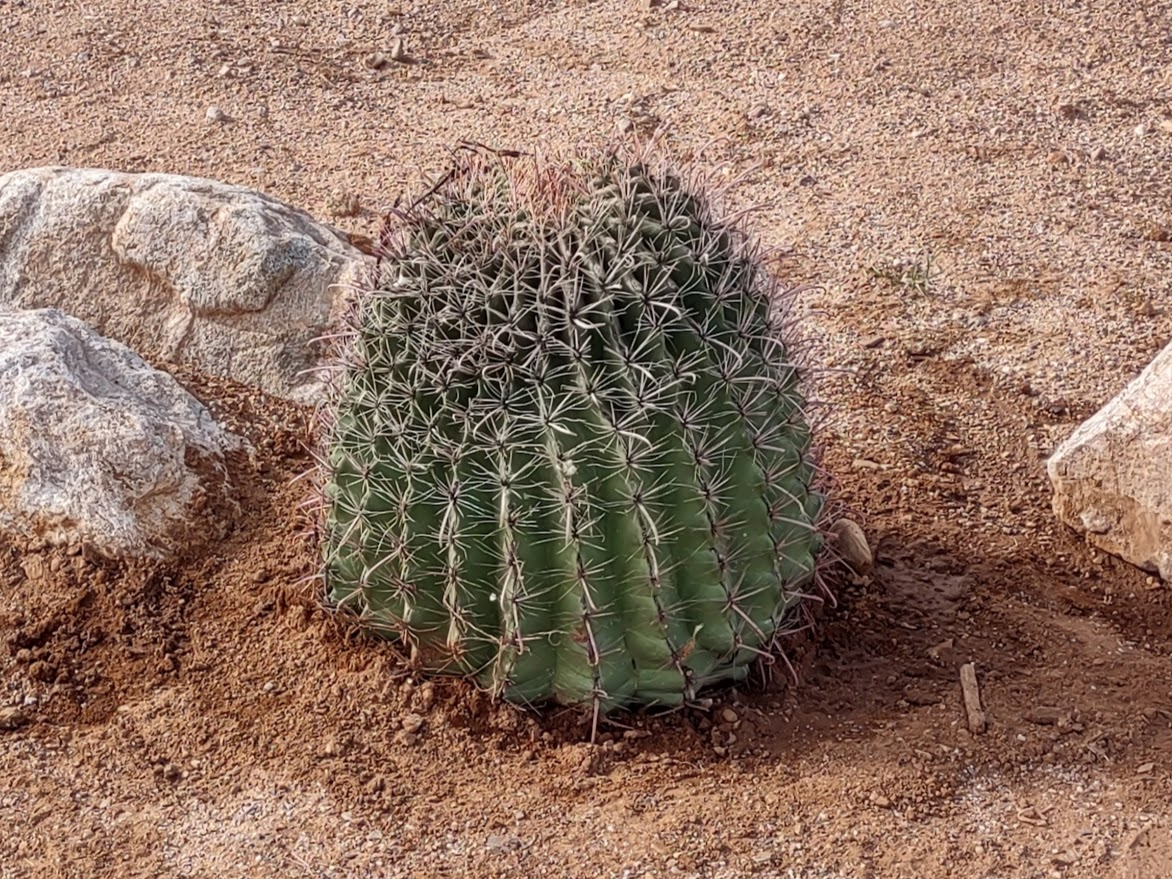
Fishhook barrel cactus (this will bloom later in the year)
Ferocactus wislizenii

2 Comments

Filed under Gardening

Master Gardener – Part 2

There’s a really good reason I have failed miserably to keep you all up to date on my progress through the Master Gardener program. There is just too much information to compact it into a blog post! It is incredible what we have been learning. (I will admit some of it goes way over my head, and I hope that once I enter the year long internship program, a lot of this will start to make sense.)

So, what have we studied so far in the last 7 weeks? Botany, soil, fertilizers, irrigation, propagation, entomology, and Integrated Pest Management (no pesticides needed!). Now that we have the bare bones of how plants and insects live together, we are now diving into the different plants themselves. Next up – cactus, succulents and Xeriscape.

Cactus are a whole new world for me. After living in Colorado for 40+ years I never grew any. They were too pokey in my gardening handbook. Don’t get me wrong, Colorado is semi-arid so there were cactus there, just not like they are here in Arizona. Now, after living in Arizona for only two years, those prickly critters are growing on me. Respect is the word I’d use. After all, living in a desert environment is only for the tough at heart. Nearly everything here will either stab you, sting you, or bite you so if you want to survive you better be able to stand the heat (literally and figuratively).

With all that said, I want to rephrase my commitment to you. Instead of a weekly post about, “What I learned in school,” I will, instead, share gardening tips along the way. If something pops up during class that could be of interest, or is one of those “fun facts’ I’ll share it with you.

So, until next time remember this:
Every part of the prickly pear is either useful (the thorns can be used as a needle) or edible (the pads as well as the fruit – have you had prickly pear jelly? Delish!).

Leave a comment

Filed under Gardening