Tag Archives: Plants

Arizona Poppy (Kallstroemia grandiflora)

Right now, the Arizona poppy in my favorite flower. It is painting the landscape in the Tuscon area in seas of orange.
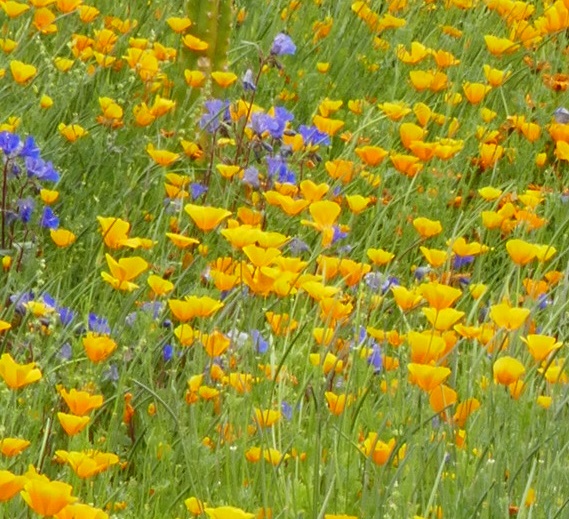
The Arizona poppy (Kallstroemia grandiflora), is a striking wildflower native to the southwestern United States and northern Mexico. Also referred to as the Desert Calico or Mexican Poppy, this resilient plant is renowned for its vibrant orange-yellow blossoms that paint the arid landscapes with bursts of color, particularly during the springtime.

Thriving in dry, rocky soils and arid climates, the Arizona poppy is well-adapted to survive in harsh desert conditions, making it a symbol of resilience and endurance. It is a perfect addition to any landscape. Its flowers, typically about an inch in diameter, bloom atop thin stems, swaying gently in the breeze.

Not only is the Arizona poppy visually captivating, but it also plays a crucial role in its ecosystem, providing nectar and pollen for various pollinators like bees and butterflies. Additionally, its seeds serve as a food source for desert-dwelling birds and small mammals.

Next time you find yourself in the desert landscapes of the Southwest, keep an eye out for this resilient wildflower, adding a splash of color to the arid terrain.


This post brought to you by the letter ‘K’ for Kallstroemia grandiflora.

#AtoZChallenge 2024 letter K

1 Comment

Filed under Gardening, Plants

Jojoba

Meet the jojoba shrub (Simmondsia chinensis), a fascinating plant renowned for its versatile uses and resilience in arid climates. Native to the deserts of the American Southwest, this evergreen shrub has captured the attention of skincare enthusiasts, environmentalists, and sustainable industries alike. We in the Sonoran desert love it for its resilience in our landscape.

Natural Beauty Secret: Jojoba oil, extracted from the seeds of the jojoba (pronounced ho-ho-ba), is a prized ingredient in skincare products. Rich in vitamins E and B, as well as antioxidants, jojoba oil nourishes and hydrates the skin. It’s a staple in moisturizers, lip balms, and hair care products, offering a natural solution for healthy skin and hair. Who doesn’t need this in our dry climate?

Eco-Friendly Crop: Beyond beauty, jojoba cultivation presents environmental benefits. Thriving in harsh desert conditions, jojoba requires minimal water and pesticides, making it a sustainable alternative to traditional crops. Its deep roots help prevent soil erosion, and it can even be used in land reclamation projects.

A Perfect Shrub for Desert Homes: Here in the Sonoran Desert the jojoba is right at home. It is a native not only to the Sonoran desert, but it calls much of the Southwest home. These tough plants thrive in our well-drained soils with sand or you can amend it with decomposed granite. Jojoba prefers full sun dry climates and can tolerate saline and nutrient-poor soils.

Diverse Applications: The versatility of jojoba extends beyond cosmetics. Its oil is a common ingredient in industrial lubricants, biofuels, and even inks and paints. Additionally, jojoba meal, a byproduct of oil extraction, serves as a nutritious animal feed.

Symbol of Resilience: In a world increasingly concerned with sustainability and climate change, the jojoba shrub symbolizes resilience and adaptability. Its ability to thrive in harsh conditions while offering a multitude of benefits underscores the importance of harnessing nature’s gifts responsibly.

Whether you’re seeking a natural skincare solution, exploring sustainable agriculture, or simply marveling at the wonders of the plant kingdom, the jojoba shrub offers a captivating journey into the intersection of nature and human ingenuity. Let’s celebrate this remarkable plant and its contributions to our world!

Further reading:
National Library of Medicine
University of Arizona, Campus Arboretum


This post presented by the letter ‘J’

#AtoZChallenge 2024 letter J

4 Comments

Filed under Gardening, Plants

Emu Bushes

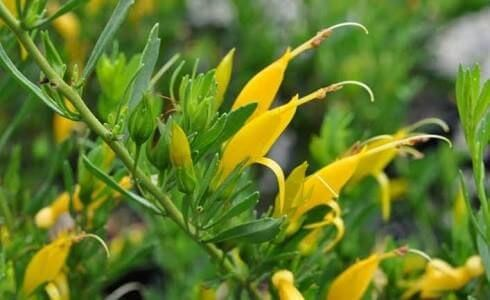
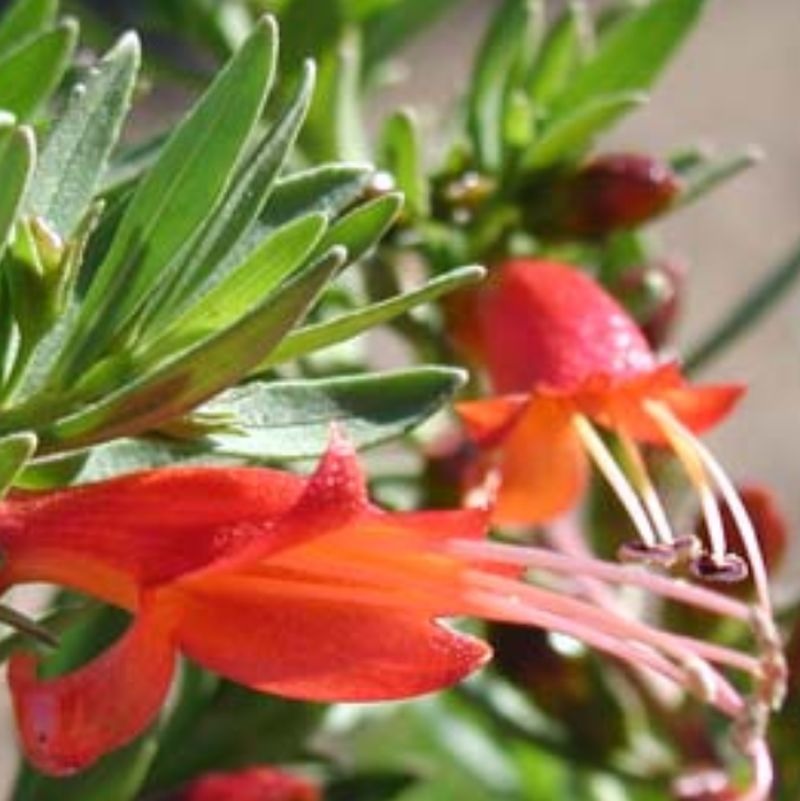
The first thing that attracted me to the Emu Bush was the name. How can you not like a plant with the name EMU? The second thing that caught my attention was the fact that they bloom in the winter. What a perfect way to add color to the long brown season called winter.

The Emu bush comes in several varieties. There is the Winter Blaze (Eremophila carnosa) which boasts a brilliant firetruck red flower. The Gold Emu (Eremophila glabra) has delicate yellow blossoms that contrast beautifully against our brown soil. Last of my favorite Emu bushes in the Valentine Emu (Eremophila maculata) which, as you might have guessed, shows off in pinks. *

Emu bushes also tend to grow slightly different from one another. Winter Blaze and the Valentine Emus grow to quite large bushes – 4-6 feet in all directions, whereas the Gold Emu is more of a ground cover growing to a 12′ spread but only about 20″ high. They love full sun and are quite hardy. They can be lightly pruned to maintain bushiness, and only need water about twice per month (a little more in the heat of the summer). Hummingbirds love this winter gem which is a big plus in my garden.

If you are interested in learning more about the Emu Bush here are a few references:
https://apps.cals.arizona.edu/arboretum/taxon.aspx?id=964
https://en.wikipedia.org/wiki/Eremophila_glabra#

*This is a good time to remind you that the botanic name is important. If you want to line a wall with high bushes, then don’t grab the Eremophila glabra, but consider the Eremophila carnosa instead.


This post brought to you by the letter ‘E’

#AtoZChallenge 2024 letter E

4 Comments

Filed under Gardening, Plants

Master Gardener Update

Am I a master gardener yet? I’m working on it! I completed the classroom portion of the program and am now an intern volunteering at the demonstration gardens in Tucson. The specific garden I’m working in is called Small Spaces which has smaller sub-gardens showing what can be done in a small space.

What I find interesting is that even if you have a large space the small spaces garden demonstrates ways to plan your own landscape no matter how big or small. Let’s say you want to have a Mediterranean feel to your landscape. If you pop over to the Pima County Demonstration Gardens, then check out the Small Spaces plot for a Mediterranean Garden. You can duplicate what has already been planted, then ask the Master Gardener for suggestions on additional plants you could add. Also, do some research on your own, and before you know it you’ll have the garden of your dreams.

African Daisy
Chrysactinia mexicana

Right now the Tucson area is blooming! There are lupine, penstemons, globe mallow, African daisies, and a vast number of other flowers that grow wild here. The palo verde and mesquite trees will be next. I’ll do my best to get photos of things as they come out. I should have plenty of opportunities during the A to Z blogging challenge as I plan to take a look at desert gardening through the month of April. Until then, enjoy these photos.

Perry’s Penstemon
Penstemon parryi
Desert Poppy with Mexican Fencepost
Eschscholzia glyptosperma
Pachycereus marginatus
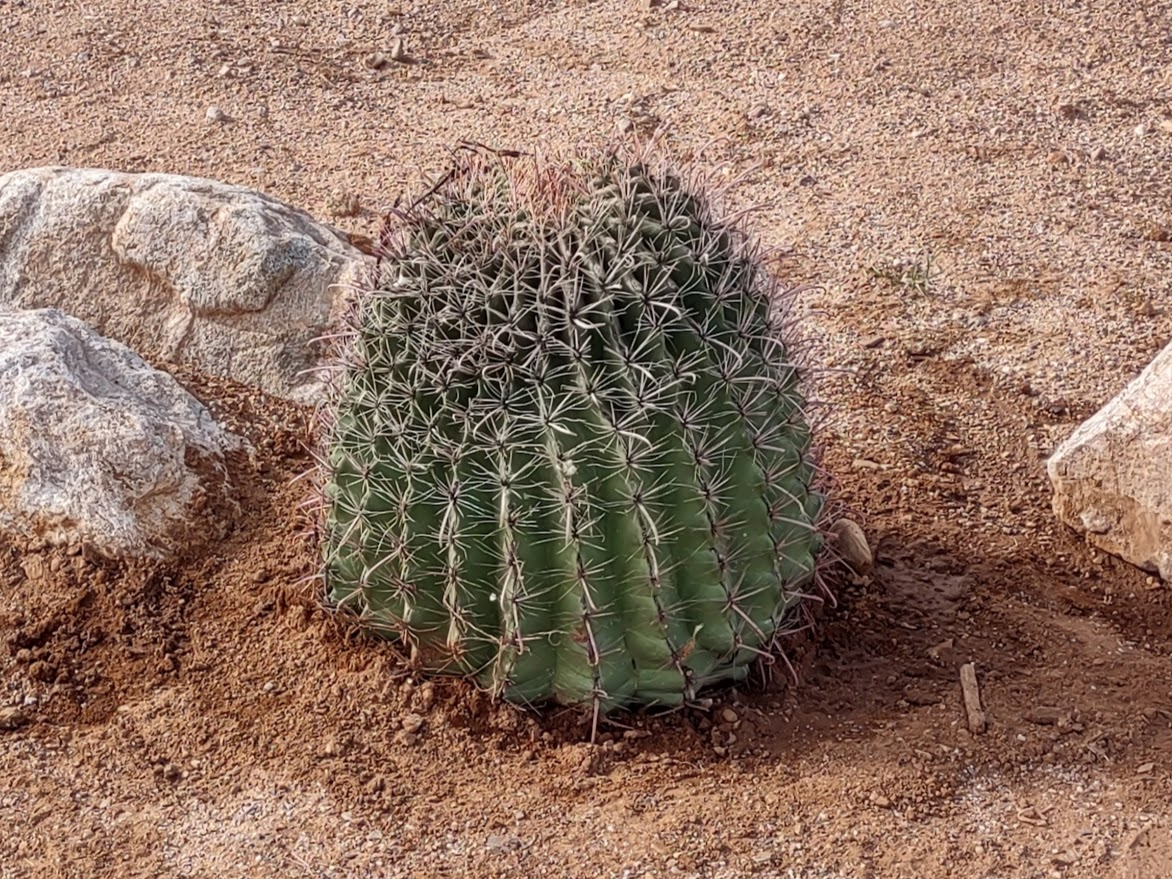
Fishhook barrel cactus (this will bloom later in the year)
Ferocactus wislizenii

2 Comments

Filed under Gardening

Cactus

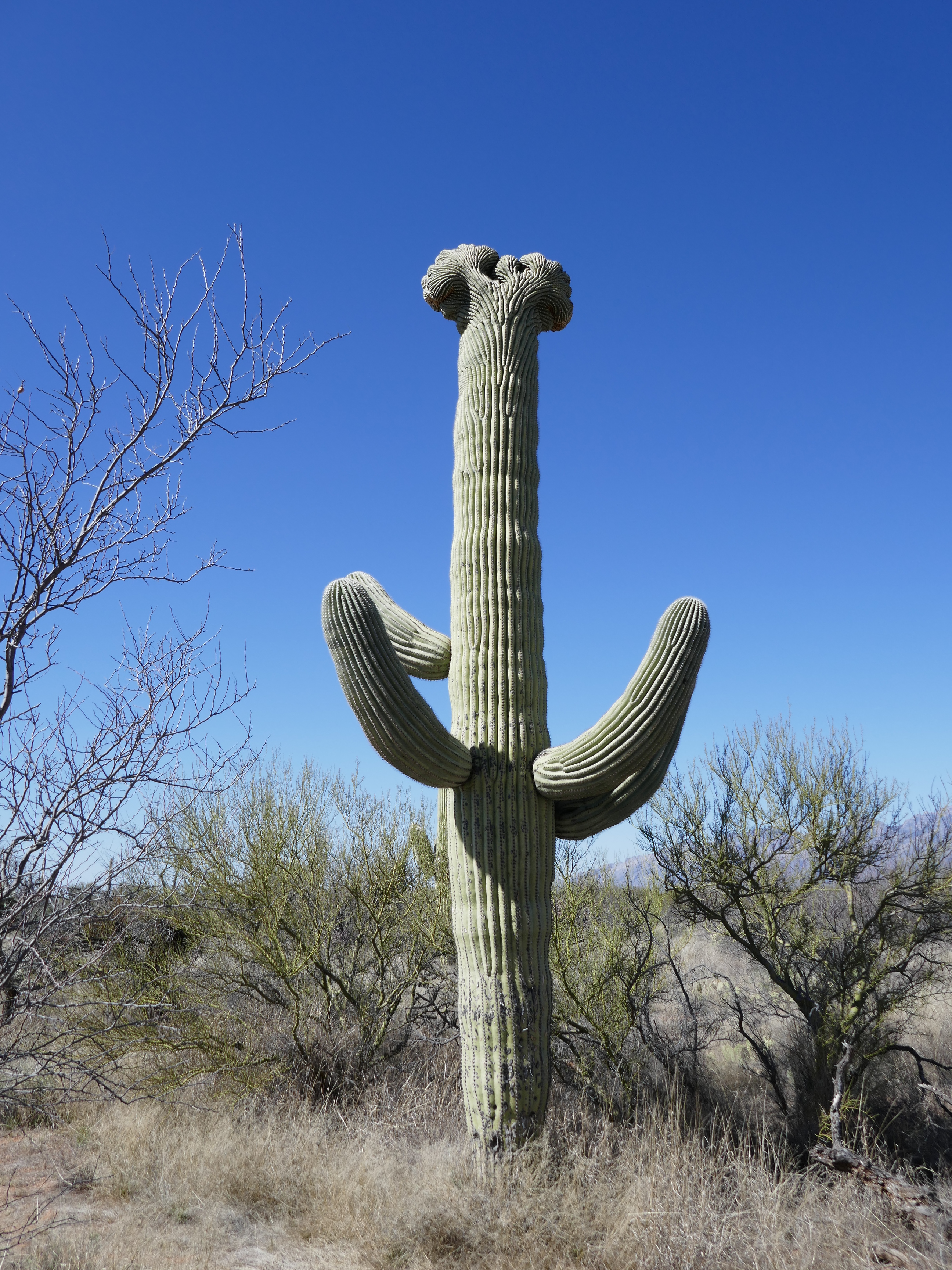
A couple of years ago we moved to the Tucson area where the cactus grow tall and their needles are in Mother Nature’s sewing kit to pierce heavy leather. Saguaro (Carnegiea gigantea) are the world’s largest cactus so we’ll dedicate this post them. These gentle giants of the desert are amazing. Not only do they grow to 40 feet tall, but they also have arms that can curl around to look like a hug, or even a chair. Be aware though, if you sit on one you will never sit anywhere else for quite sometime. Their two inch needles will leave you with many holes in your backside.

Here are a few fun facts about the saguaro:

  • Saguaro is pronounced suh-waa-row.
  • They grow slowly. Only about 1-2″ per year.
  • When fully hydrated a mature cactus can weigh 3,200 – 4,800 pounds
  • The root system is pretty shallow (5-6 inches deep), but it stretches outward as far as the plant is tall. It does have a single tap root that will extend into the ground a few feet. Considering how tall these gentle giants are, that’s not very deep.
  • The woody skeleton can be used to thatch a roof, build a fence, or furniture parts.
  • “Saguaro Boots” (holes that birds built their nests) can be used as a water container.
  • A saguaro can have anywhere from zero arms to over 25 and usually curve upward.

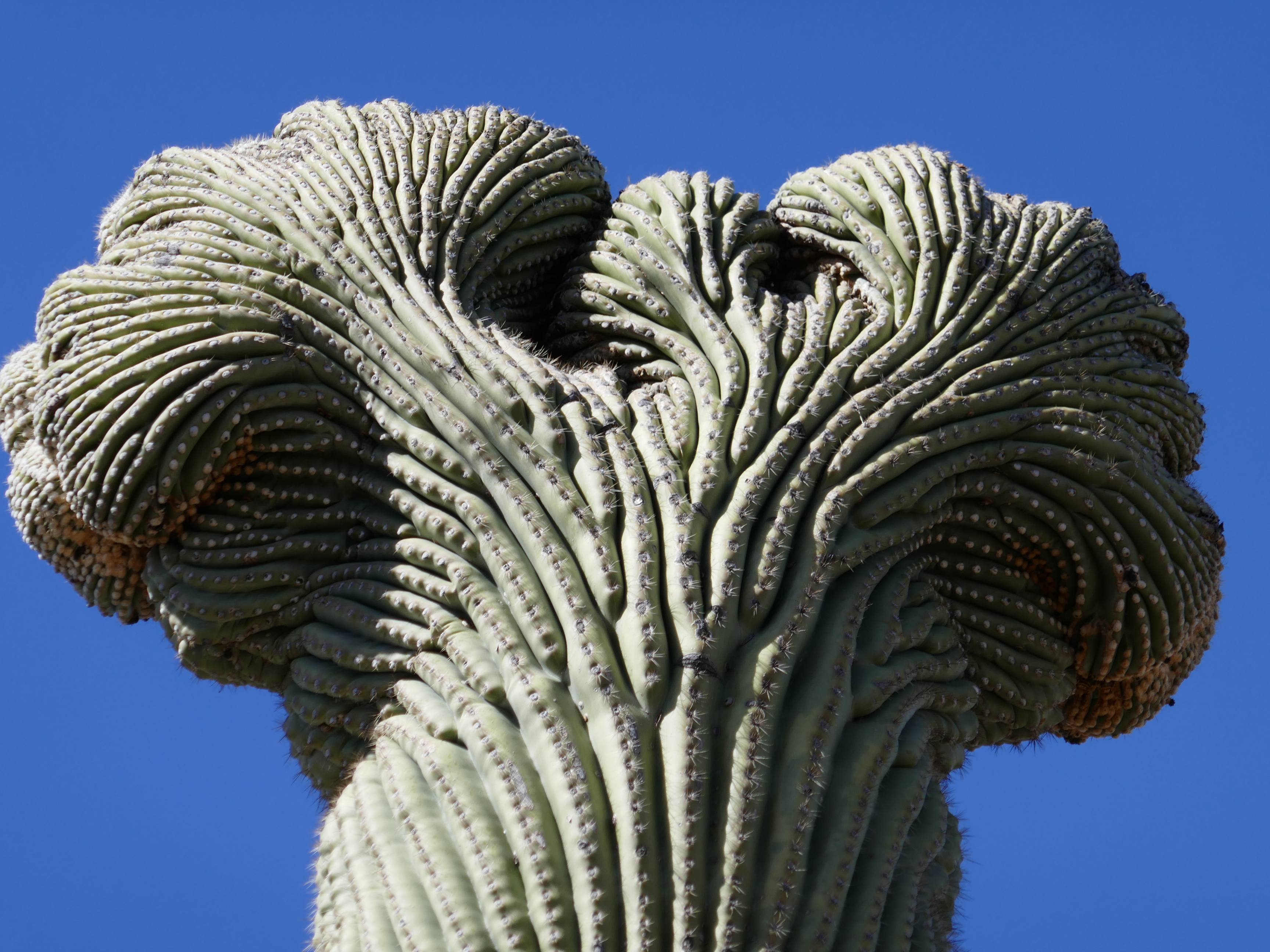
One particular saguaro that I love to see is the crested saguaro. This is something that a few saguaro like to do, but not all. It is unclear why this happens but every now and again a saguaro’s growing tip (that’s the top) produces a fan like form. They are somewhat rare, and there are a few “hunters” who have spent years documenting and counting these amazing cactus. There are a few right near Tucson and I have (so far) seen three out of the thousands that are in the area.


3 Comments

Filed under Gardening, Plants

Growing Garlic

I love garlic. I eat it in nearly every dish I make (except cookies), and I’m sure I put too much in sometimes. My sister told me about how she likes to grow her own garlic and she found a great batch from Germany. I don’t remember the exact strain, but she gave me a couple of bulbs so I could grow some too. She lives in the Midwest and I live in the Rocky Mountain region. When I asked how to grow it she said to take one clove, pointy side up, and stick in the ground in the fall and it will come up in the spring. Scratching my head I smiled. I wasn’t sure how that would translate to my climate, but we were interrupted at that moment and I didn’t follow up.  Then, once home, I ate the garlic and never thought again to try to grow it.

Last month, I read an article on one of my favorite blogs, Lovely Greens, about how to grow garlic. She reiterated just what my sister said. Plant it in fall and it grows in spring. Again, this is coming from someone in a climate very different from my own (Isle of Mann to be exact). So, this is the second time in just a few months that I have been told about growing garlic. Maybe I should make an attempt at it.

Unfortunately, I don’t have garlic left from my sister’s batch, but I did just get some from the grocery store. I figure that if I manage to grow that then I will ask for more of the German variety (it is delicious by the way). Doing my usual “guess and by golly” method of doing things, I found a little pot  and stuck four cloves in the dirt and dumped water on it.

It’s growing!!

I am pleasantly surprised that it is actually growing. The larger sprout had already started while it was attached to the bulb so that little guy had a head start. The others are also showing signs of life. If all goes well I should have four nice bulbs of garlic late in the Spring or early Summer.

I will keep you posted on the progress of my planting experiment. Until then, I think I need to eat what’s left of the bulb these came from. Roasted sounds lovely.

1 Comment

Filed under Gardening