
One of the great things about living in the Sonoran Desert are the variety of plants that grow here. For the letter ‘F’ in the A to Z Blogging Challenge, I give you the Fairy Duster (Calliandra californica) and Fig Tree (Ficus carica).
Fairy Duster

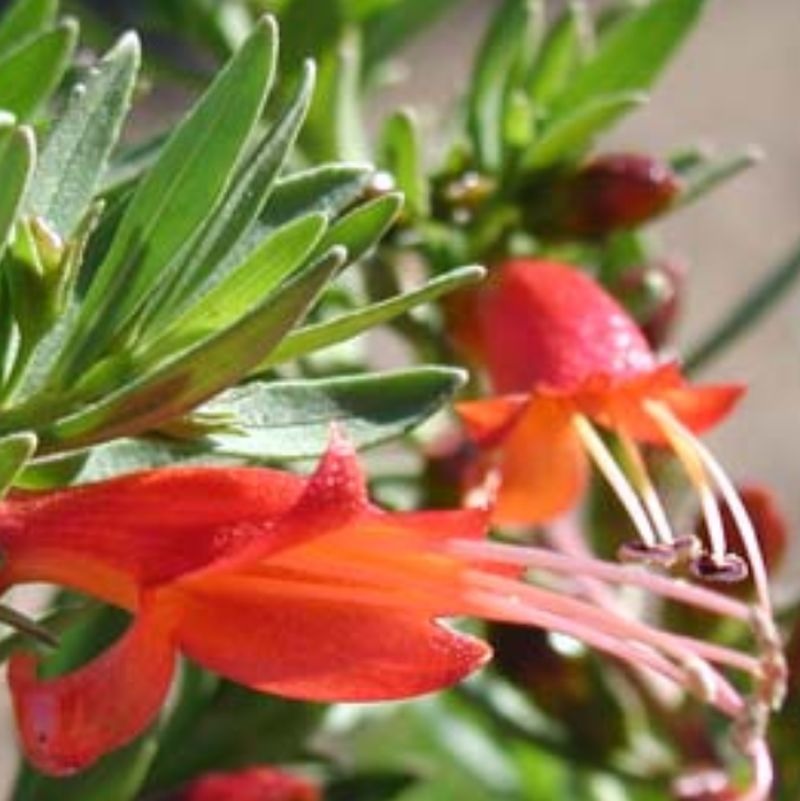
The Fairy Duster has to be about the cutest sounding plant around, but it is not the prettiest (IMHO). Although the spikey flowers are reminiscent of a duster you could associate with a fairy, the plant itself is very woody. When we first moved into our new home, I had three of these in the front yard. I now have zero. I was sad that none of them survived the winters up here (we are a bit higher than Tucson so the winters are just cold enough that we have snow and frost). Yet, they thrive just below us in and around Tucson.
Historically, the fairy duster’s roots have been used for a red dye used in leather work. Decoctions were used in folk medicine to treat cystitis, kidney ache, urethritis, prostate inflammation, cramps, fever, and toothache.
Further reading on the fairy duster can be found on these websites:
U of A’s Campus Arboretum and Natives Now SoCal.
Fig Tree

The humble fig has over 800 species and are mostly found in the tropics. There is one that I’m happy to say, grows in my yard, the Black Mission Fig (Ficus carica ‘Mission’). I am most excited about this tree because I planted it as a 6″ cutting (it is now about 8″ tall and has 10 leaves) from a larger fig tree. Most likely the “parent” fig is in the Master Gardeners’ demonstration gardens here in Tucson.
Fig trees are very hardy and can grow in Tucson’s tough soil with little to no added fertilizers. They have two harvest seasons so fruit is available nearly all year long. Because the fig is deciduous, avoid planting this near a pool or a patio. Also keep in mind that they grow to 20-30 feet high AND wide so give them enough space to spread out. Their roots also spread far and wide taking water from any resource available including other plants. A good spot to plant this fun fruit tree is near a basin that will provide plenty of water during monsoons.
Have you ever noticed the absence of figs in the produce section of the local grocer? Most fruits and vegetables that find their way to the grocery store are usually pick, packed, and shipped weeks before arriving at the produce section. Figs have a very short shelf life of only a week or two so unless you live by a fig grove, the possibility of finding fresh figs is pretty low. If you do happen to find fresh figs you’re in for a treat. The range of flavors across the many varieties run from sweet to nutty.
What I’m most looking forward to is the shade a fig can provide. I can see it now, sitting under the canopy of large lobed leaves with tea and a good book. I can’t think of a better way to spend an afternoon.
Learn more about fig trees:
Growing Common Figs in the Low Desert
Growing Edible Figs




 arbitrarydustbunnies