Am I a master gardener yet? I’m working on it! I completed the classroom portion of the program and am now an intern volunteering at the demonstration gardens in Tucson. The specific garden I’m working in is called Small Spaces which has smaller sub-gardens showing what can be done in a small space.
What I find interesting is that even if you have a large space the small spaces garden demonstrates ways to plan your own landscape no matter how big or small. Let’s say you want to have a Mediterranean feel to your landscape. If you pop over to the Pima County Demonstration Gardens, then check out the Small Spaces plot for a Mediterranean Garden. You can duplicate what has already been planted, then ask the Master Gardener for suggestions on additional plants you could add. Also, do some research on your own, and before you know it you’ll have the garden of your dreams.
African Daisy Chrysactinia mexicana
Right now the Tucson area is blooming! There are lupine, penstemons, globe mallow, African daisies, and a vast number of other flowers that grow wild here. The palo verde and mesquite trees will be next. I’ll do my best to get photos of things as they come out. I should have plenty of opportunities during the A to Z blogging challenge as I plan to take a look at desert gardening through the month of April. Until then, enjoy these photos.
Perry’s Penstemon Penstemon parryi
Desert Poppy with Mexican Fencepost Eschscholzia glyptosperma Pachycereus marginatus
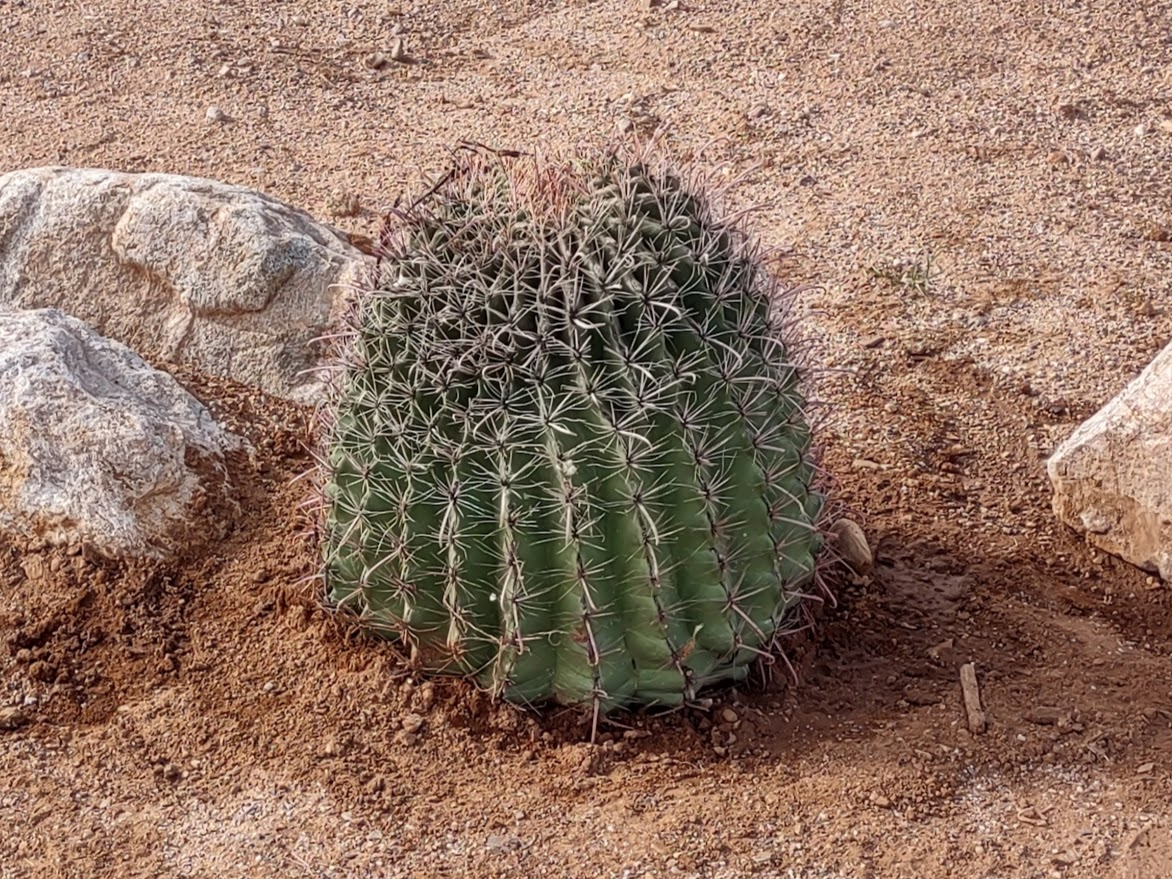
Fishhook barrel cactus (this will bloom later in the year) Ferocactus wislizenii
April is almost here, and for those of you who follow my blog you know what that means — Blogging A to Z is here! I am excited to share with you what my theme for this year will be.
DESERT GARDENING (and other artsy things related to gardens)
Why gardening? At the end of 2023 I spent 16 weeks studying to become a master gardener here in Pima County, Arizona and I want to share with you the many things I have been learning. The specific articles will cover cactus, succulents, bugs (the good and bad), along with water harvesting, trees, and more! I am excited to get started!
Buckle up and get ready for a month of Desert Gardening.
There’s a really good reason I have failed miserably to keep you all up to date on my progress through the Master Gardener program. There is just too much information to compact it into a blog post! It is incredible what we have been learning. (I will admit some of it goes way over my head, and I hope that once I enter the year long internship program, a lot of this will start to make sense.)
So, what have we studied so far in the last 7 weeks? Botany, soil, fertilizers, irrigation, propagation, entomology, and Integrated Pest Management (no pesticides needed!). Now that we have the bare bones of how plants and insects live together, we are now diving into the different plants themselves. Next up – cactus, succulents and Xeriscape.
Cactus are a whole new world for me. After living in Colorado for 40+ years I never grew any. They were too pokey in my gardening handbook. Don’t get me wrong, Colorado is semi-arid so there were cactus there, just not like they are here in Arizona. Now, after living in Arizona for only two years, those prickly critters are growing on me. Respect is the word I’d use. After all, living in a desert environment is only for the tough at heart. Nearly everything here will either stab you, sting you, or bite you so if you want to survive you better be able to stand the heat (literally and figuratively).
With all that said, I want to rephrase my commitment to you. Instead of a weekly post about, “What I learned in school,” I will, instead, share gardening tips along the way. If something pops up during class that could be of interest, or is one of those “fun facts’ I’ll share it with you.
So, until next time remember this: Every part of the prickly pear is either useful (the thorns can be used as a needle) or edible (the pads as well as the fruit – have you had prickly pear jelly? Delish!).
About 6 months ago I learned that the University of Arizona Cooperative Extension provides a Master Gardener training program. To be honest, I had never heard of this and was curious about it (check out their website HERE). The extension program is robust and provides information on a vast array of subjects like, 4-H, food preservation, forest health, financial literacy, master gardener, and so much more.
I actually found out about the master gardener program through social media (Facebook to be exact). So, 6 months ago I submitted an application, went through the interview process, and much to my delight, I was accepted into the program. YAY!
Tuesday was my first day back at school (it has been at least a thousand years since I was in a classroom). Even though I was a little nervous at first, I soon met a few fellow students and am now a part of a study group. When I got home it felt like my first day in Kindergarten. Fear of the unknown was replaced by a giddy feeling of joy that I made new friends at school. Yep, I’m feeling like a little kid right now.
Like any first day at school, we spent most of the time with the introduction to the rules, expectations, and the course schedule. It’s going to be a LOT! But, we also get to look forward to working in their beautiful gardens once classes are completed and the final exam is passed (yes, we have a final exam too!). We toured the gardens while we were there and I’m not kidding that they are beautiful.
The garden center is set up for the home gardener and is divided into areas such as a potted garden, edible garden, shade garden, and a xeriscape garden. The Master Gardeners are there to help home gardeners create and care for their own gardens along with help to trouble shoot pests and other nasty things that quietly invade a garden (for me it was gophers and frost).
Over the course of 12 weeks we will be hammered with information and I hope to share with you some of the highlights along the way. Join me and I will do my best to share tidbits that you might need in your own garden. Please be aware that I am NOT a Master Gardener – yet. If you have questions or concerns about your own garden, please refer your questions to a Master Gardener in your area.
In the vast expanse of arid landscapes, such as the Sonoran Desert or the Mojave Desert, where the scorching sun dominates and water is a scarce resource, lies a fascinating and rewarding pursuit—desert gardening. Contrary to popular belief, desert regions offer unique opportunities for cultivating vibrant and sustainable gardens that thrive in extreme conditions. With careful planning, resource management, and an understanding of desert ecology, anyone living in the desert can create an oasis of greenery amidst the desert’s harsh realities. Let’s explore the art of desert gardening, highlighting its benefits, essential techniques, and some plant choices that will transform your perception of what’s possible in a barren land.
Here are a few things you should understand before getting started:
Understand the Desert Environment Before embarking on a desert gardening journey, it is crucial to comprehend the unique characteristics of this environment. Deserts are known for their low rainfall, intense sunlight, high temperatures, and poor, well-drained soil. However, deserts also possess a rich ecosystem adapted to these challenging conditions, offering inspiration and guidance for gardeners. By observing the native plant species and their survival strategies, we can gain valuable insights into which plants thrive in these extreme climates. Remember, desert environments can range from freezing temperatures to high heat so be aware what your micro-climate might be.
Efficient Water Management Water scarcity is the biggest challenge in desert gardening. To overcome this obstacle, gardeners must focus on water conservation and efficient irrigation techniques. Collecting and storing rainwater through rain barrels or cisterns can provide a valuable resource during dry spells. Additionally, implementing drip irrigation systems, and using mulch to retain moisture are effective methods to minimize water loss and maintain soil hydration. Using passive water systems which combine berms with swales will make any rains efficient in watering your garden. Grouping plants with similar water needs together and practicing xeriscaping (a landscaping method that reduces water usage) can further optimize water usage in desert gardens.
Soil Improvement Desert soils are often low in organic matter and lacking in essential nutrients. Enhancing the soil’s quality is crucial to support plant growth in these harsh conditions. Incorporating compost, organic matter, and well-balanced fertilizers can significantly improve soil structure, water-holding capacity, and nutrient availability. Amending the soil with materials like perlite or vermiculite can also enhance drainage and prevent waterlogging, which is detrimental to desert plants. Keep in mind that some plants are happy living in the unenhanced soil found in the desert so don’t overdo it.
Plant Selection Choosing the right plants is fundamental to successful desert gardening. Native species that are adapted to the arid environment are the ideal choice, as they have evolved to withstand the harsh conditions. These plants have developed unique features like succulent leaves, water-storing stems, or deep root systems that help them conserve water. Examples of popular desert plants include cactus (golden barrel, prickly pear, or Mexican Fence Posts), succulents (such as agave and aloe vera), desert marigold, desert lavender, and desert milkweed. It’s important to consider factors such as sun exposure, cold tolerance, and water requirements when selecting plants for a desert garden.
Creating Microclimates In the desert, temperature extremes can be challenging for plants. Creating microclimates within your garden can help protect sensitive plants from excessive heat or cold. Using shade structures, such as pergolas or shade cloth, can provide relief from intense sunlight during the hottest part of the day. Planting taller, heat-tolerant species strategically to provide shade for more delicate plants can also be beneficial. Additionally, windbreaks made of fences or hedgerows can shield plants from strong desert winds, reducing water loss and preventing damage.
Desert gardening celebrates nature’s resilience and showcases the incredible adaptability of plant life. By embracing the unique challenges of the arid environment and employing smart gardening techniques, you can create lush and sustainable gardens that thrive in the face of adversity. Through efficient water management, soil improvement, careful plant selection, and the creation of microclimates, desert gardeners can transform barren landscapes into vibrant oases, inspiring others to appreciate the beauty and diversity of desert flora. So, if you’re ready to embark on an extraordinary gardening adventure, the desert awaits you with open arms and the promise of a flourishing paradise.
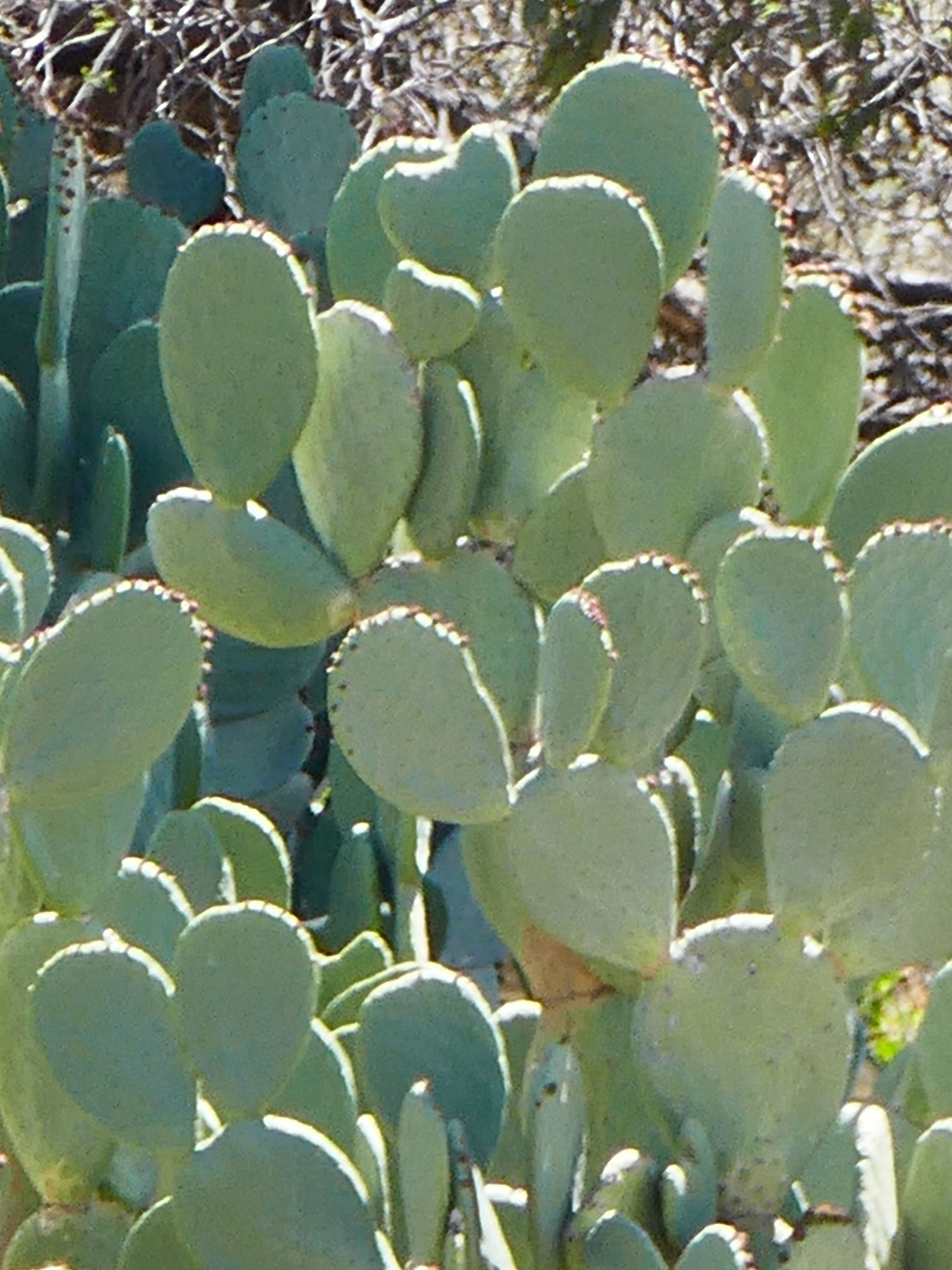
For today’s post I am going to dive into the Prickly Pear (Opuntia). It is large cactus with paddle like leaves. They grow abundantly in Arizona and across most of the hot, arid states of the southwest and Mexico. They are easy to propagate and grow. The well known prickly pear fruit is used in jellies, syrups,
Thornless Prickly Pear
In my own neighborhood there are hedges made exclusively of thornless prickly pears. One neighbor’s hedge is over 8 feet high. Interestingly, the thornless variety was born through careful breeding by Luther Burbank in the latter part of the 1800’s (you can read his entire story here). He had hoped that the spineless breed would give grazing cattle a supplement for their water needs. As it turns out, he could not permanently breed out the thorns. If a cactus faces stress it will push out a most prickly pin cushion.
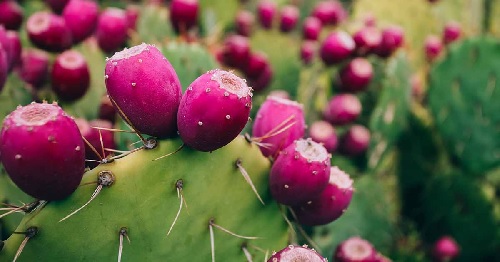
One of the wonderful aspects of prickly pears is the fruit. The easy part is knowing that all species of prickly pear fruit (and the whole plant!) is non-toxic and quite delicious to eat. The hard part? Harvesting them. A woman here in Arizona uses a set of long hot dog tongs and a plastic bucket.
My personal favorite way to harvest them is at the store after all the thorns are removed. I have an aversion to wandering off the beaten path, into the desert, with scorpions and rattle snakes. I like to stay far away from the things that are poisonous.
Bonus! These beauties are good for you too! They aren’t classified as a super food, but they should be. High in fiber, antioxidants, and carotenoids they rank right up the with the best of the green foods. It is promoted for treating diabetes, high cholesterol, obesity and hangovers. It’s also touted for its antiviral and anti-inflammatory properties. I think I’ll start eating these by the basket full and live to be 110! Before you go too crazy munching on these, be aware that your stomach may need a little bit of time to get used to the fiber.
The prickly pear cactus is also a nice place for pack rats and other rodents to build their homes. It is a great place for them to nestle in for the winter months and find a protected place from their various predators.
Although this plant looks intimidating it is worth getting past that and discover all that you can do with it. Whether you make smoothies from the fruit or toss a salad with parts of the paddles, you will have a plant that just keeps on giving. Just beware of the thorns. They are sharper than you can imagine.
It will be a year ago in May that we closed on our new home in Tucson. It was a move that we had considered for several years and when the housing market went crazy we knew it was time to go. We put our Colorado house of 22 years on the market and booked it down to Arizona. We went from a high-altitude semi-arid climate to a desert. Gardening is not the same!
Our home here in Tucson is a new build and the yard? A block of dirt. Not just any kind of dirt, but concrete-like dirt. A pick ax does not cut it here. A shovel? Forget it. Needless to say, when I planned out my new gardens I didn’t expect to have to use a drill to make a dent in the soil. I also knew nothing about planting a garden in the desert.
In Colorado I did pretty well with my flower beds and a tree or four. I had three flower beds, rescued a tree that started out under a fence, and a honeysuckle that grew to twenty five feet with a perfect crown. I’m not totally sure how I managed the perfect honeysuckle, but I think it had a lot to do with luck.
Years ago I lived in the Mojave desert so I knew what to expect from the heat but, back then I wasn’t much for planting anything. So, when we first arrived to this dirt patch I thought the best way to go about things is to plant rock gardens in one corner of our half acre lot. Then I went crazy at the nursey (Green Things is my favorite place).
I was soon busy drilling, hacking, pounding, and turning the horrible stuff they call dirt into something cactus could grow in. In a few short weeks, through 90-100 degree days, I had three gardens.
Just getting started on the second garden.This is the first garden with Aloe, Penstemon, and Elephants Food.
All went pretty smoothly until the winter months came – along with the gophers. It was a disaster. Tucson had an unusually cold winter this year and where we live is usually 3-4 degrees colder than the city. When the temperatures were hitting 35 degrees in town we were closer to 30. There were a couple of mornings that it dipped to 28.
I spent half the winter covering and uncovering the gardens. The Elephants Food was the first to freeze. It was a battle that I was determined to win so I just had to stay on top of the weather forecasts to be sure nothing else froze. Then came the snow. Three snow storms came through but I battled on. The Mangave was looking sad along with the Aloe, yet I knew I could stay ahead of the weather.
Then the gophers came. They killed the Fern Tree, ate the roots of an Arizona Rosewood, and started working on the gardens. That did me in. I threw in the towel, dug up everything that was still alive in the gardens, and moved them inside. One of my recycling bins turned into a holding box. Planter boxes I planned to donate were pulled out of storage. It was a fiasco.
Now it is spring time here in the desert. The temperatures are warming up and my recycling box/planter has been moved outside. The gardens? The one garden with the penstemons survived (they are hardy down to -10) so it will be joined by a couple of new penstemons. The other two? I haven’t decided what to do with them, but they certainly won’t have any Aloe in them.
This post brought to you by A to Z Blogging Challenge and the letter G.
Last year I found one of my favorite plants, Elephant Food (Portulacaria afra). It has reddish brown stems and the leaves are a beautiful emerald green. When grown to a full bush they will grow to about 8-12 feet. BUT, they do not tolerate a freeze. This I found out the hard way.
When I purchased these from the local nursery I explained that I did not live in Tucson proper but a bit higher. Elephant Food will do just fine with a little cold, they said. Not to worry they said. This past winter was cold for the area (cold is a relevant term of course). According to my backyard weather station we went down to 25 overnight about 5 times. The Elephant Food kicked the bucket. It did look pretty good right after it was planted (to the right of the aloe).
This winter taught me that there were a number of plants that I thought would be fine with a little bit of cold. Aloe do not like the cold, and neither do mangave. The fairy dusters were a mixed bag (three died and two are hanging on by a leaf). I dug up the aloe and mangave before they were a complete loss, but I really didn’t want a house full of plants for the winter.
Now that it is April the temperatures with start to climb and I can put everything back outside. Well, after tomorrow night…it’s supposed to go down to 35 overnight. That’s cold for these parts!
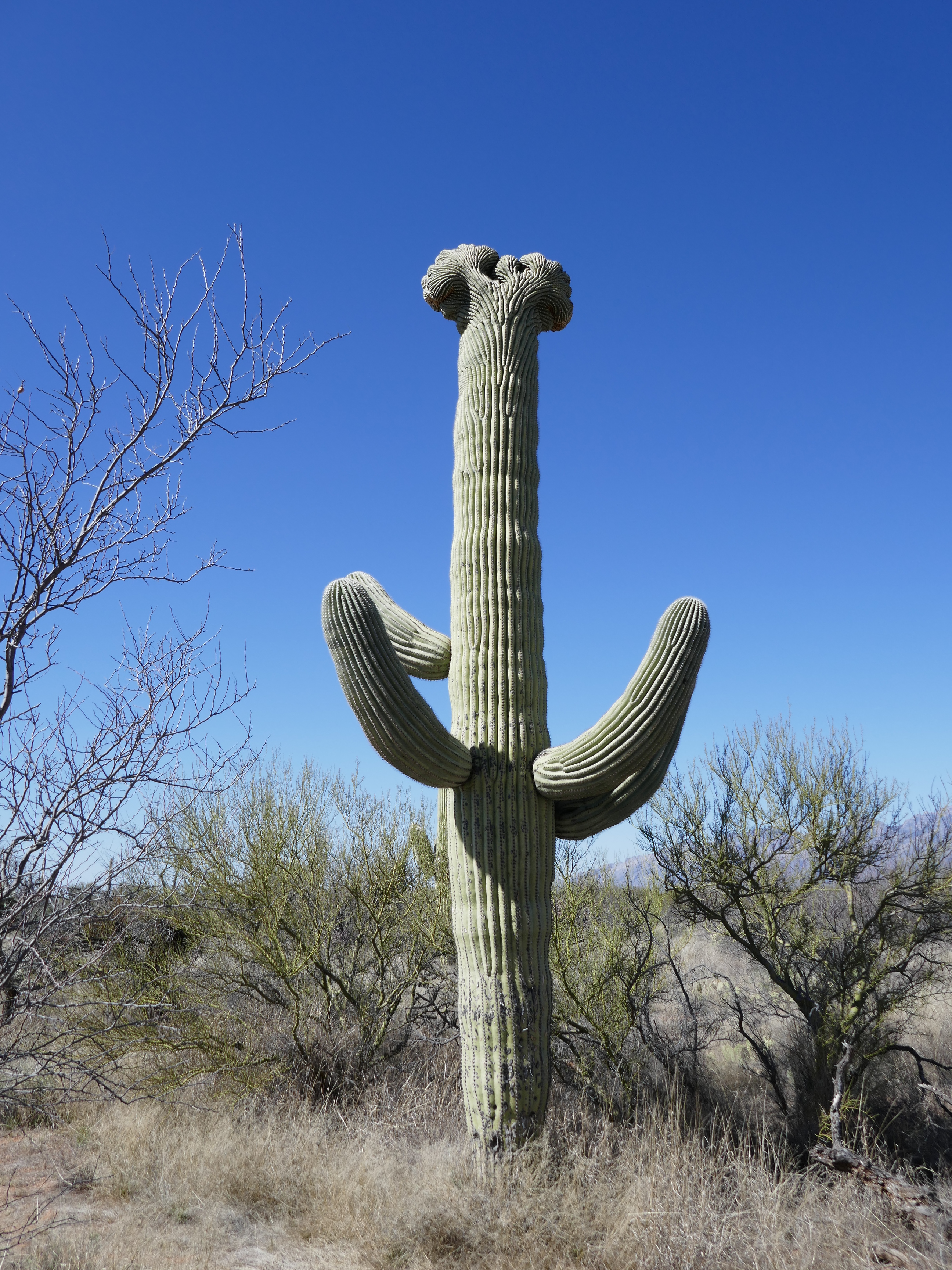
A couple of years ago we moved to the Tucson area where the cactus grow tall and their needles are in Mother Nature’s sewing kit to pierce heavy leather. Saguaro (Carnegiea gigantea) are the world’s largest cactus so we’ll dedicate this post them. These gentle giants of the desert are amazing. Not only do they grow to 40 feet tall, but they also have arms that can curl around to look like a hug, or even a chair. Be aware though, if you sit on one you will never sit anywhere else for quite sometime. Their two inch needles will leave you with many holes in your backside.
Here are a few fun facts about the saguaro:
Saguaro is pronounced suh-waa-row.
They grow slowly. Only about 1-2″ per year.
When fully hydrated a mature cactus can weigh 3,200 – 4,800 pounds
The root system is pretty shallow (5-6 inches deep), but it stretches outward as far as the plant is tall. It does have a single tap root that will extend into the ground a few feet. Considering how tall these gentle giants are, that’s not very deep.
The woody skeleton can be used to thatch a roof, build a fence, or furniture parts.
“Saguaro Boots” (holes that birds built their nests) can be used as a water container.
A saguaro can have anywhere from zero arms to over 25 and usually curve upward.
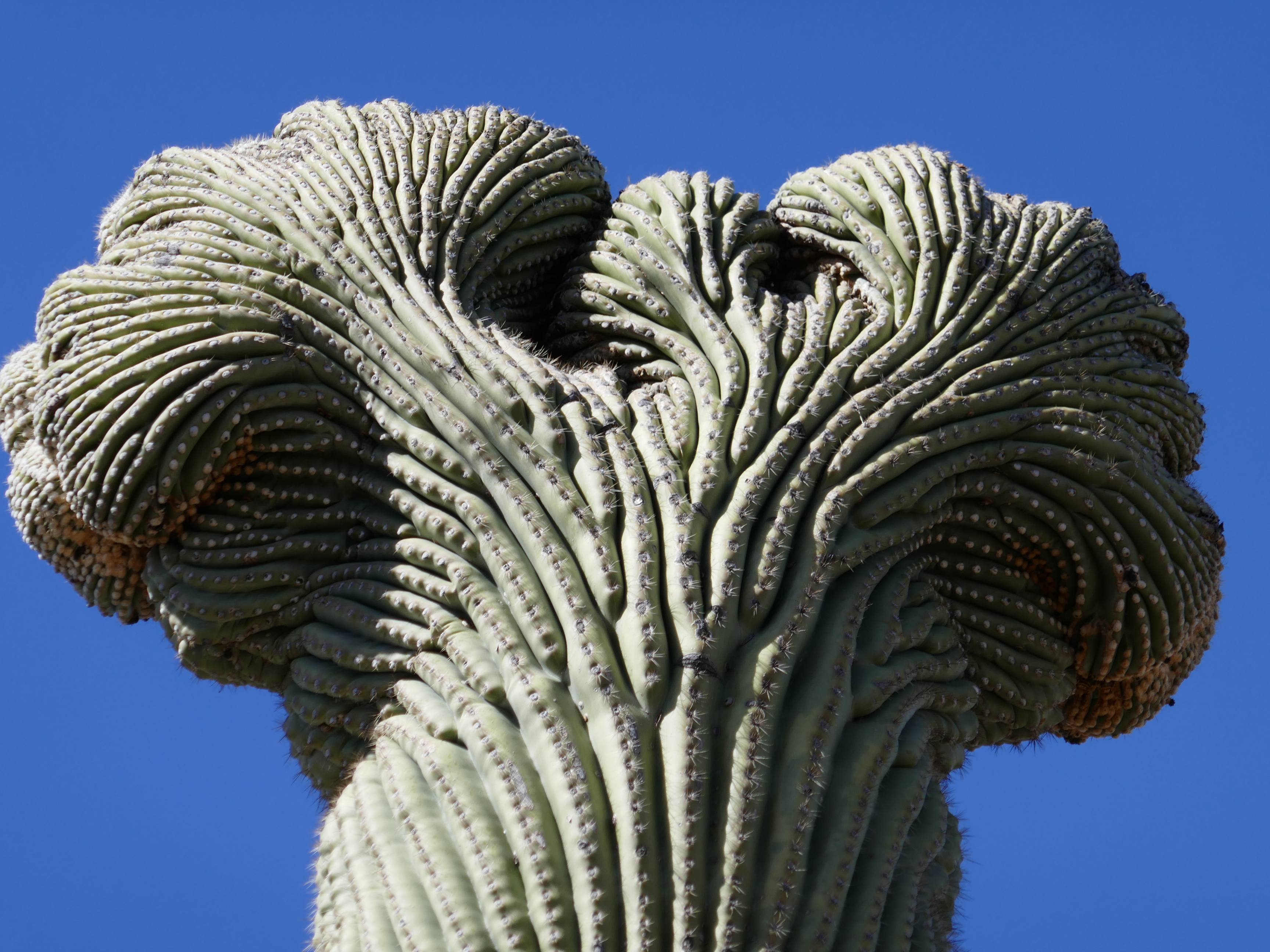
One particular saguaro that I love to see is the crested saguaro. This is something that a few saguaro like to do, but not all. It is unclear why this happens but every now and again a saguaro’s growing tip (that’s the top) produces a fan like form. They are somewhat rare, and there are a few “hunters” who have spent years documenting and counting these amazing cactus. There are a few right near Tucson and I have (so far) seen three out of the thousands that are in the area.
My orange tree is still alive and this year is a hopeful one. If you are just tuning in, the saga of my orange tree has been going on for three years now. In year one it grew one, lovely orange. Last crop there was hope for at least 10 oranges, but it nearly died because of spider mites. 2021 is a hopeful year for my dear orange tree.
I have raised the pot up out of the water catch tray in an attempt to ward off the mites. I am also restraining myself from overwatering. I think that was the trouble last crop…too much H2O. So far, so good.
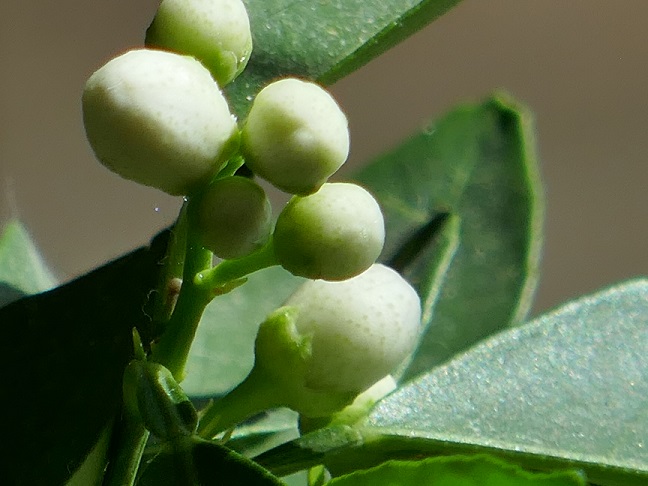
Today, there is a mix of buds, blooms, and small berries. Because of this mix, I am hoping this crop will be more successful. My potted orange tree has been a learning experience so we’ll see how it goes.
















 arbitrarydustbunnies